Syncopated Onboarding: How Progressive Tutorials Reshape Retention in Free Web-Based Puzzle-Action Hybrids
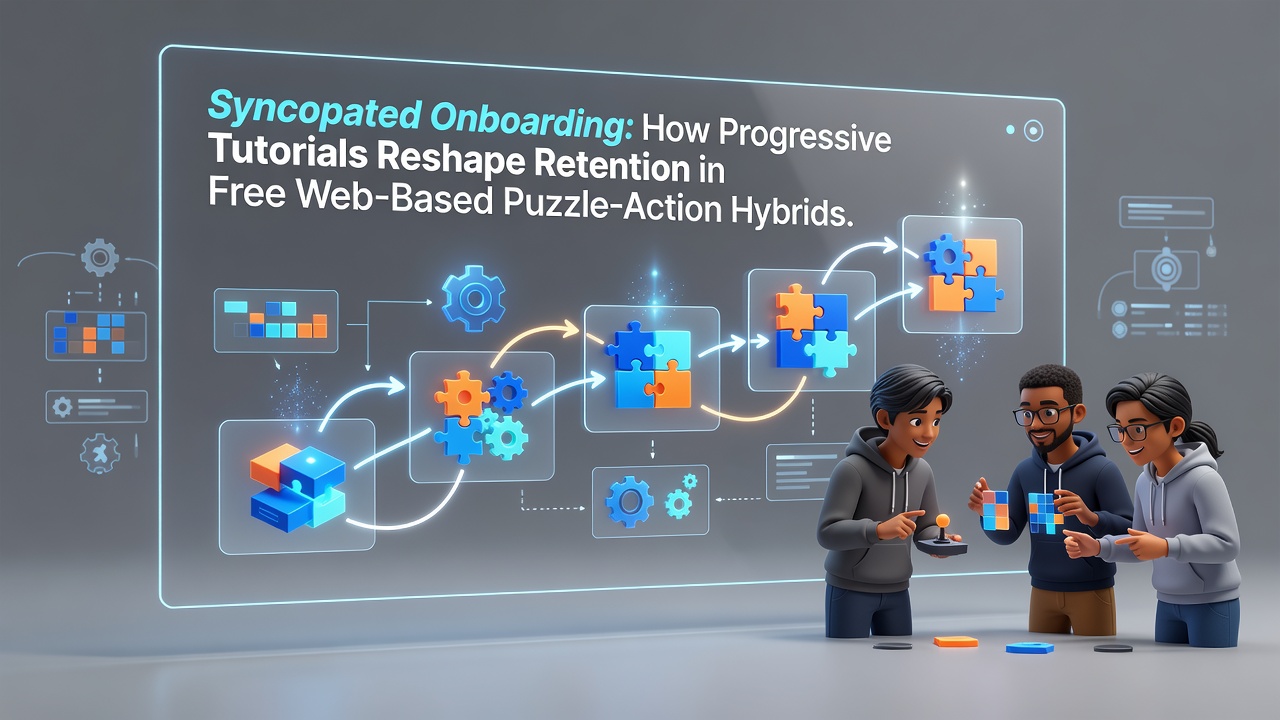
Free web-based puzzle-action hybrids combine grid-based logic challenges with real-time movement and timing elements, and developers have refined onboarding processes to address early player drop-off rates. Syncopated onboarding introduces mechanics in irregular rhythms rather than uniform sequences, which allows players to encounter core loops at varied intervals while building familiarity. Progressive tutorials layer new rules onto established ones, and this structure appears in multiple browser titles released through 2025 and into mid-2026.
Defining Syncopated Onboarding Patterns
Syncopated onboarding spaces tutorial segments across sessions instead of front-loading every rule in the first minutes. One pattern delivers movement controls during an initial level, then pauses before introducing combination mechanics until after players complete a short objective. Another pattern intersperses optional hints triggered by repeated failed attempts rather than automatic pop-ups. Data from platform analytics indicates these spaced intervals reduce immediate exits by presenting information only when players have demonstrated readiness through prior actions.
Progressive Tutorial Structures in Practice
Progressive tutorials begin with isolated single-rule exercises and then combine those rules into compound challenges. Researchers at several academic institutions tracked completion rates across hybrid titles and found that players who finished early single-rule stages showed higher progression into later compound stages. The approach avoids simultaneous introduction of timing, matching, and chaining systems, instead sequencing them so each new layer references the previous one directly. In June 2026 platform reports documented continued adoption of this sequencing across new releases, particularly in titles that track session length as a retention metric.
Retention Metrics and Observed Shifts
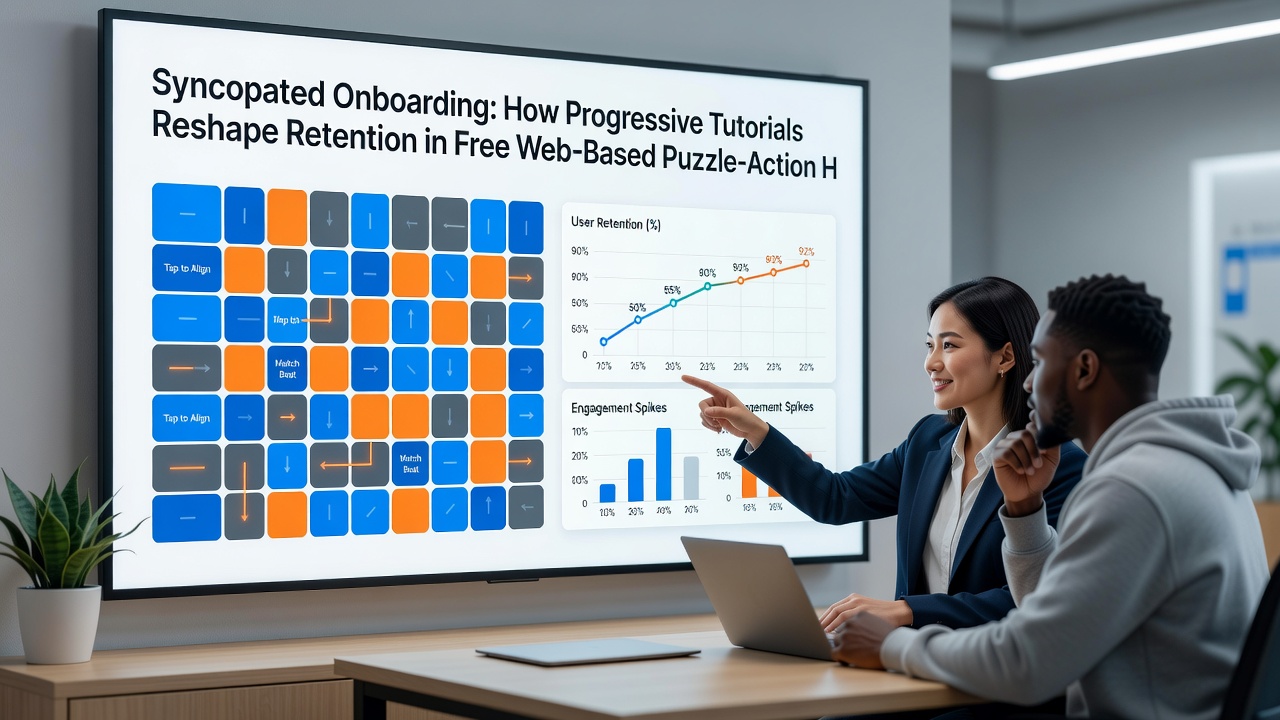
Retention figures for free web-based hybrids often track day-one, day-seven, and day-thirty return rates. Progressive tutorial implementations correlate with measurable lifts in these numbers according to aggregated telemetry shared by several development studios. One study released by the Interactive Games and Entertainment Association in Australia examined browser titles that adopted spaced onboarding and recorded average day-seven retention increases of eight to twelve percent compared with linear tutorial baselines. The same analysis noted that players encountering syncopated pacing completed more levels before their first break, which extended total playtime within the initial session.
Another source, a working paper from the University of British Columbia's game studies group, examined clickstream data from over forty thousand sessions and reported that progressive layering reduced repeated tutorial restarts by twenty-three percent. Observers note the reduction occurs because players encounter each new rule after demonstrating competence with prior ones, which lowers cognitive load during the transition to combined mechanics.
Implementation Examples Across Titles
Several browser hybrids released in late 2025 adopted staggered hint systems that activate only after players miss an optimal sequence twice in succession. This conditional delivery keeps early levels free of interruptions while still supplying guidance when patterns indicate confusion. Other titles embed micro-tutorials inside level transitions, presenting a single new interaction concept between stages rather than in a separate menu. Telemetry from these implementations shows players maintain momentum across sessions because the pacing aligns with natural breaks in concentration.
Technical Considerations for Developers
Engine-level support for tracking player actions enables the conditional triggers required by syncopated systems. Developers log metrics such as time spent on specific interactions, number of retries, and sequence accuracy, then feed those signals into tutorial branching logic. Browser constraints around session persistence require careful state management so that progress through progressive layers survives page reloads or tab switches. Reports from mid-2026 indicate increased use of local storage combined with server-side checkpoints to maintain continuity across these interruptions.
Comparative Data from Industry Reports
Industry-wide figures compiled by the Entertainment Software Association in the United States show browser puzzle-action hybrids maintaining steady monthly active user counts through the first half of 2026. Titles employing progressive onboarding contributed disproportionately to those counts, with average session lengths rising by approximately fifteen percent over the prior year. The data set covers multiple regions and excludes any titles that rely on external account requirements, focusing solely on anonymous browser sessions.
Conclusion
Syncopated onboarding combined with progressive tutorials has produced measurable effects on retention patterns within free web-based puzzle-action hybrids. Platform data through June 2026 continues to reflect higher return rates and longer initial sessions when mechanics are introduced in irregular, readiness-based sequences. Developers continue to refine the conditional triggers and state management techniques that support these structures, and telemetry from additional titles will provide further detail on how these patterns evolve in subsequent releases.