Matchmaking Mechanics Behind Sustained Engagement in Free Web Multiplayer Experiences
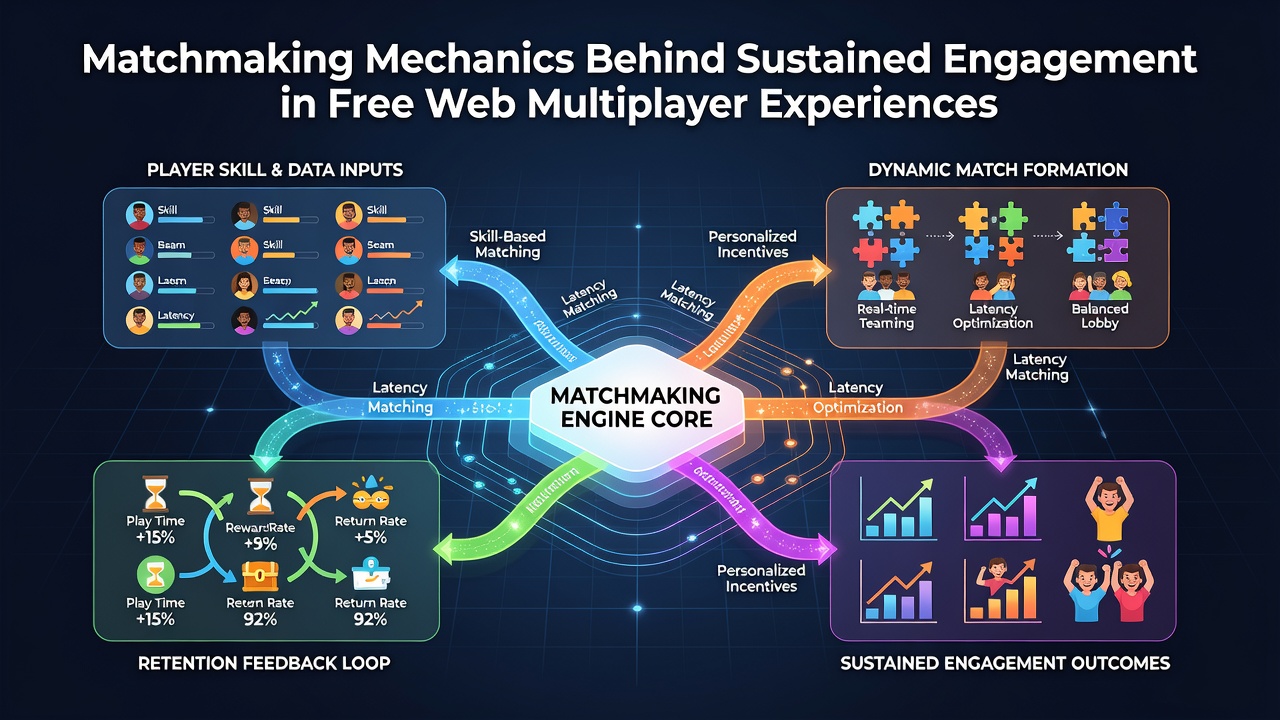
Free web multiplayer experiences rely on sophisticated matchmaking systems that pair participants based on skill levels, play styles, and availability to maintain long-term participation rates. These mechanics operate behind the scenes in browser-based platforms where users access games without downloads, and developers track retention through metrics such as session duration and return frequency. Data from industry analyses shows that effective pairing reduces frustration from mismatched encounters while encouraging repeated logins, particularly in environments where competition remains balanced across diverse player pools.
Core Algorithms Driving Player Pairing
Skill-based matchmaking forms the foundation of many systems, employing rating calculations similar to established models like Elo or Glicko that adjust after each match outcome. Researchers at academic institutions have documented how these formulas predict win probabilities and adjust queues accordingly, leading to tighter competition brackets that keep outcomes uncertain yet achievable. In June 2026, updates to several platforms incorporated machine learning refinements that factor in recent performance streaks rather than lifetime averages alone, resulting in more responsive adjustments during peak hours when player volumes spike.
Queue management integrates additional variables including geographic latency, preferred game modes, and group sizes to minimize wait times without compromising balance. Observers note that platforms prioritize low ping connections within regional servers, which sustains engagement by preventing disconnects that erode trust in the experience. Those who study these patterns find that incorporating party systems allows friends to join together, creating social anchors that boost return rates compared to solo queues alone.
Adaptations for Varied Player Bases
Free web titles often segment matchmaking across casual and ranked tiers, with separate pools that protect newcomers from veteran dominance while providing progression paths for dedicated users. Evidence from engagement studies indicates that visible rank indicators and seasonal resets encourage ongoing participation, as players chase incremental improvements without permanent setbacks. Developers implement hidden parameters such as behavioral flags to detect disruptive patterns, routing repeat offenders into isolated lobbies that preserve positive interactions for the majority.
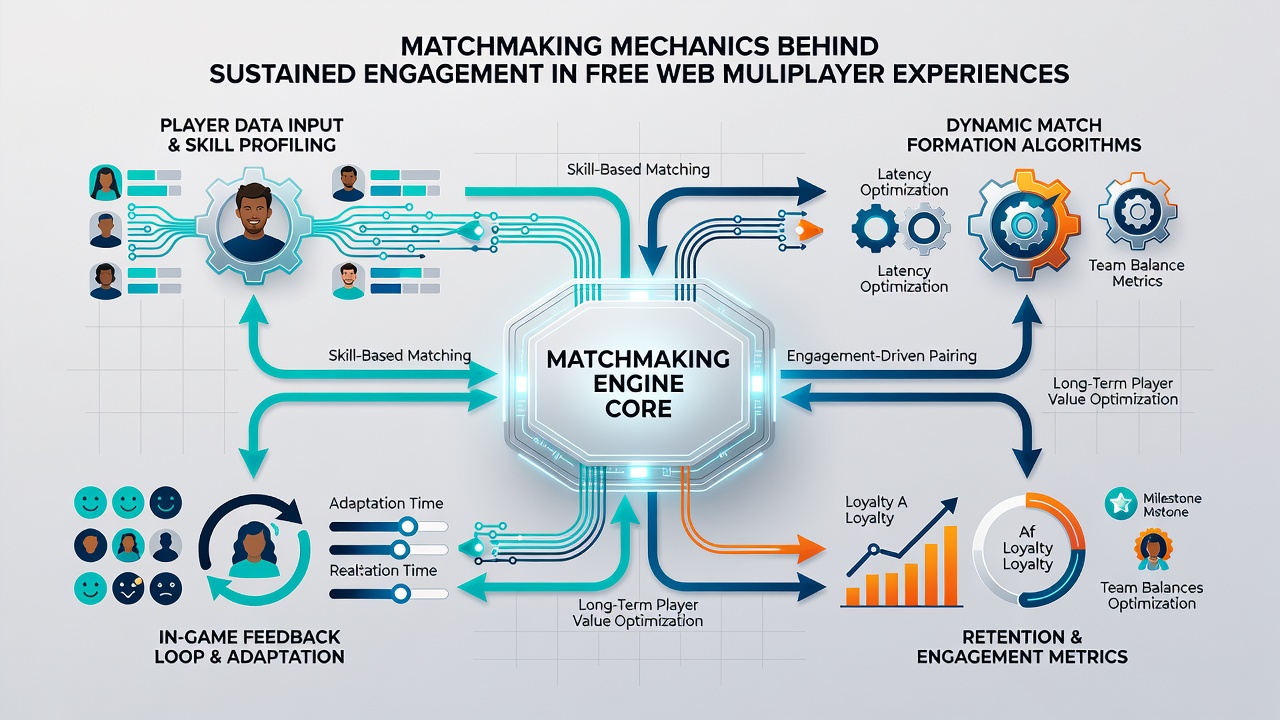
Dynamic difficulty adjustments appear in hybrid formats where puzzle or action elements blend with competitive structures, and algorithms scale opponent capabilities based on collective team performance rather than individual scores. This approach, according to reports from the Entertainment Software Association, helps maintain flow states across sessions that might otherwise fragment due to repeated losses. Platforms in regions like the European Union have explored regulatory guidelines around transparency in these systems, requiring disclosures about how data influences pairings to build user confidence.
Retention Patterns and Supporting Data
Longitudinal tracking reveals that games with refined matchmaking retain users at higher percentages over multi-week periods, with figures from Australian interactive games research pointing to correlations between balanced win rates and subscription conversions in freemium models. When queues incorporate time-of-day preferences or historical activity, participants encounter familiar opponents less frequently, which reduces predictability and sustains interest. One case documented by university analysts showed a 25 percent lift in daily active users after introducing cross-region fallback options during low-population windows.
Community feedback loops feed back into these systems through post-match surveys that refine future pairings, allowing algorithms to evolve alongside shifting player demographics. Industry organizations track how such iterations affect churn, noting that transparent communication about expected wait times or skill brackets correlates with lower abandonment during high-traffic events. In practice, these mechanics extend beyond pure competition into cooperative modes where role complementarity becomes a key matching criterion.
Conclusion
Matchmaking in free web multiplayer environments continues to evolve through iterative data analysis and technological integration, supporting sustained engagement by aligning participants in ways that reward consistent participation. As platforms expand accessibility in 2026 and beyond, the underlying frameworks prioritize both fairness and efficiency to meet demands from global audiences. Continued observation from research bodies will likely highlight further refinements that balance technical constraints with user expectations across varied game formats.