Feedback Loops in Shared Browser Spaces Shaping Cooperative Strategies Across Free Game Genres
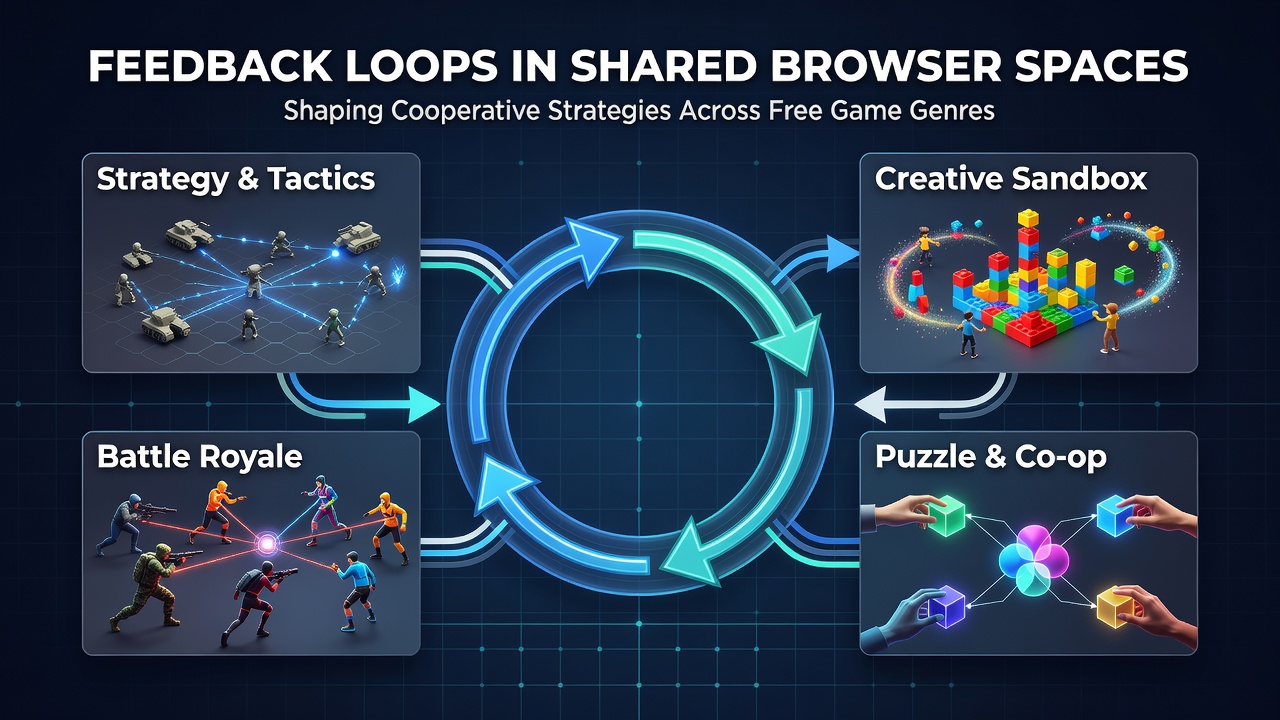
Feedback loops emerge naturally in shared browser spaces where multiple participants interact simultaneously through web-hosted interfaces, and these mechanisms directly influence how cooperative strategies develop across free game genres including puzzle, action, sports, and adventure hybrids. Players receive immediate responses to their inputs through visible changes in shared environments, which then prompt adjustments in group tactics without requiring external coordination tools.
Mechanics of Reinforcement in Real-Time Browser Environments
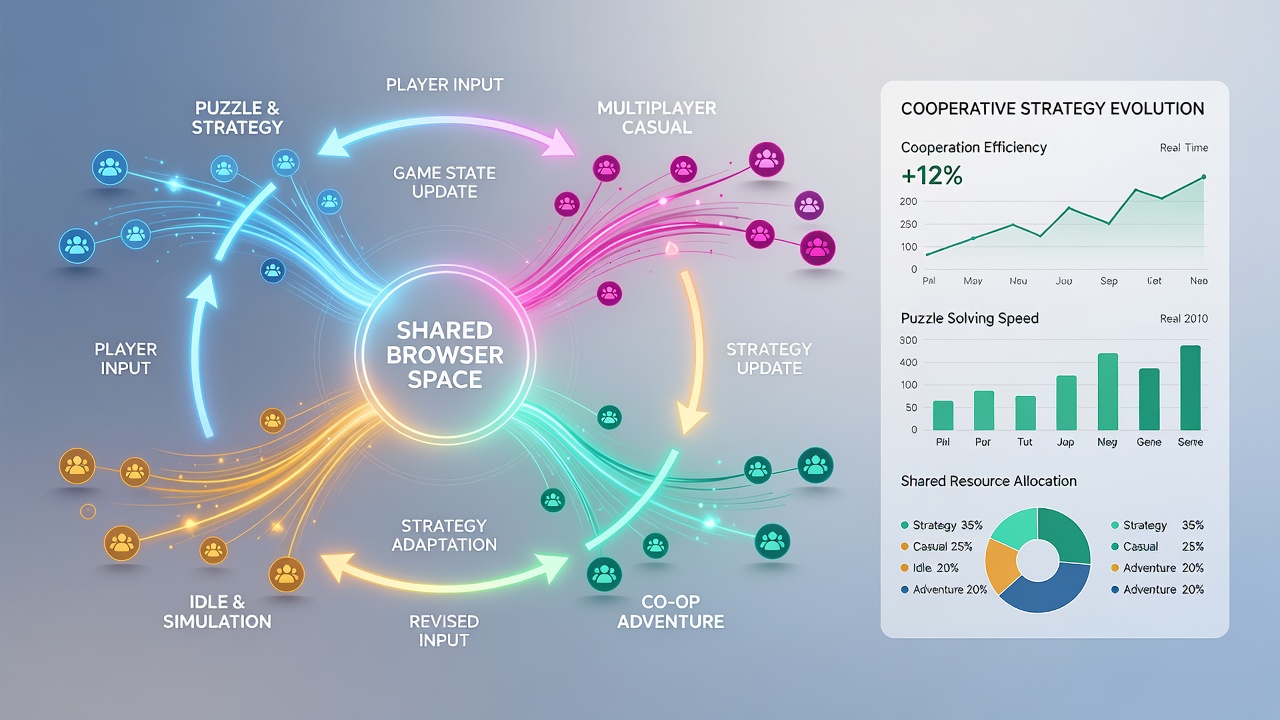
Positive feedback loops occur when successful cooperative actions amplify further collaboration, such as when one player's puzzle solution unlocks resources that enable teammates to advance faster in subsequent stages. Data from browser game analytics platforms shows that these cycles strengthen when interfaces display collective progress metrics in real time, allowing groups to refine their approaches based on visible outcomes. Negative feedback loops, by contrast, arise when repeated failures trigger adaptive behaviors like role redistribution or revised timing sequences, and studies indicate these adjustments often stabilize team performance over extended sessions.
Browser technologies facilitate these loops through low-latency updates that synchronize player states across distributed connections, and this synchronization creates environments where individual decisions feed directly into group results. Observers note that free-to-access titles leverage these features extensively because they lower barriers to entry, drawing diverse participant pools that test strategy variations under consistent conditions.
Genre-Specific Patterns in Cooperative Adaptation
In puzzle-oriented browser games, feedback loops frequently center on sequential problem-solving where early clues shared among participants accelerate collective resolution rates. Action hybrids incorporate timing-based reinforcements, where coordinated maneuvers produce chain reactions that reward synchronized inputs and discourage isolated efforts. Sports simulation titles demonstrate endurance-focused loops, as sustained team positioning generates momentum indicators that influence subsequent play calls, while adventure elements introduce narrative branches that evolve based on group choices accumulated over multiple sessions.
Research indicates that these patterns hold across genres because shared browser spaces standardize the delivery of outcome data, reducing variables that might otherwise obscure cause-and-effect relationships. Through June 2026, aggregated usage metrics from major web gaming portals reveal consistent increases in session durations when feedback systems highlight cooperative milestones, suggesting structural reinforcement of group-oriented behaviors regardless of thematic framing.
Technological Enablers and Data-Driven Insights
Web standards such as WebSocket protocols and canvas rendering support the continuous exchange of state information that powers these loops, and developers integrate them into free titles to maintain engagement without paid progression gates. According to findings published by the Entertainment Software Association, multiplayer browser experiences account for growing shares of total playtime in accessible gaming categories, with cooperative metrics showing particular responsiveness to loop structures.
One documented case involves racing puzzle hybrids where vehicle positioning data feeds back into track modifications visible to all participants, prompting route reallocations that improve group lap times. Another example appears in athletic strategy titles where sound and visual cues combine to signal collective adjustments, and these layered signals have been shown to reduce miscommunication incidents in extended matches. A report from the Australian Bureau of Communications, Arts and Regional Development further highlights regional variations in browser gaming adoption, noting that cooperative feedback systems correlate with higher retention across diverse player demographics.
Long-Term Strategy Evolution in Open Web Platforms
Over repeated exposures, participants internalize effective responses to loop signals, leading to emergent meta-strategies that transfer between related genres hosted on the same platforms. These developments occur because browser environments preserve interaction histories through session cookies and leaderboards, allowing returning groups to build on prior outcomes rather than restarting from neutral states. Evidence suggests that such continuity amplifies cooperative sophistication, particularly when free access encourages frequent short sessions that compound learning effects.
Developers monitor these evolutions through telemetry that captures decision trees and outcome correlations, then refine interface elements to sustain balanced participation. This iterative process maintains accessibility while supporting increasingly complex group tactics across puzzle-action and sports-adventure combinations.
Conclusion
Feedback loops embedded in shared browser spaces continue to direct cooperative strategy formation across free game genres by converting individual actions into collective signals that prompt ongoing refinement. The mechanisms operate consistently through standardized web technologies, and data through June 2026 confirms their role in extending engagement and shaping adaptive behaviors. These dynamics remain observable across puzzle, action, sports, and hybrid formats because the underlying reinforcement structures transcend thematic differences.