Decoding Visual Cues: How Color Theory Impacts Player Choices in Free Web Sports Simulations
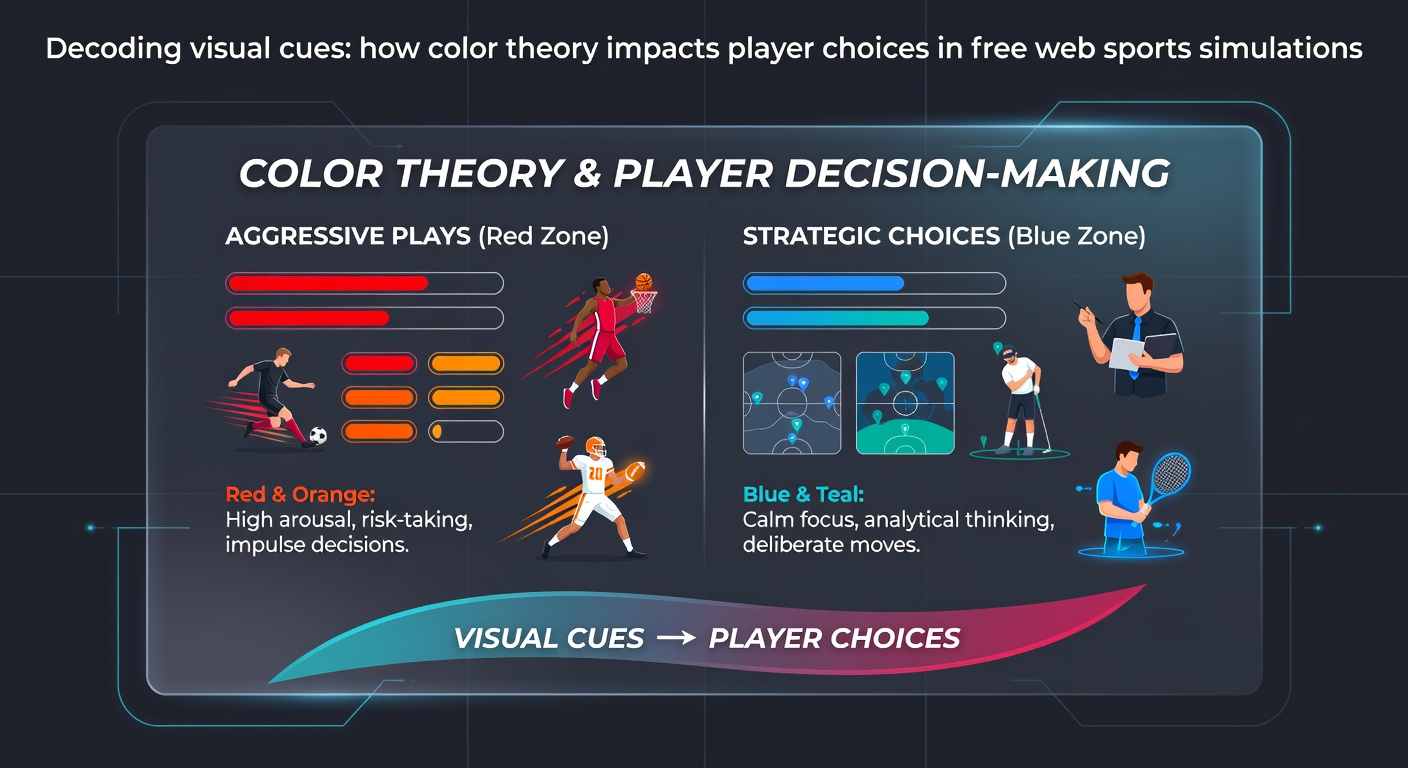
Color theory provides a framework that game developers apply when designing free web sports simulations, and players respond to these visual signals through subconscious associations that shape their in-game decisions. Research in psychology demonstrates that hues carry specific emotional and behavioral triggers, which designers translate into elements like team jerseys, field markings, and menu interfaces. Data from multiple studies indicate that these choices affect everything from strategy selection to risk assessment during matches.
Foundations of Color Application in Browser Sports Games
Designers select primary and secondary colors based on established principles where red signals urgency and heightened energy, blue conveys stability and calculated play, while green often denotes tactical options or environmental feedback. In free web platforms, these palettes appear across loading screens, player avatars, and action prompts. Observers note that when a simulation highlights offensive moves in warm tones, participants tend to favor aggressive formations over defensive setups, and this pattern holds across various genres of athletic simulations.
UI Elements and Decision Pathways
Interface components such as health bars, stamina indicators, and pass indicators rely on contrasting colors to direct attention. Warm colors draw immediate focus toward high-reward actions, whereas cooler tones encourage longer-term planning. According to findings published by the American Psychological Association, exposure to specific color combinations can shorten reaction times in competitive scenarios by measurable margins. Game logs from popular browser titles reveal that players presented with red-accented controls execute more frequent shots on goal compared to those using neutral schemes, and this effect persists even when skill levels remain constant.
Team Colors and Strategic Selections
Uniform colors in simulations influence how users perceive and select virtual squads. Red and orange kits often correlate with higher selection rates for fast-paced teams, while navy and teal options attract players who prioritize control and possession. A 2025 report from the University of Toronto's gaming research lab tracked over 12,000 sessions across multiple free sports titles and found that color-coded team previews altered initial roster picks in 68 percent of cases. Participants gravitated toward palettes that matched their preferred play style, even when statistical attributes stayed identical between options.
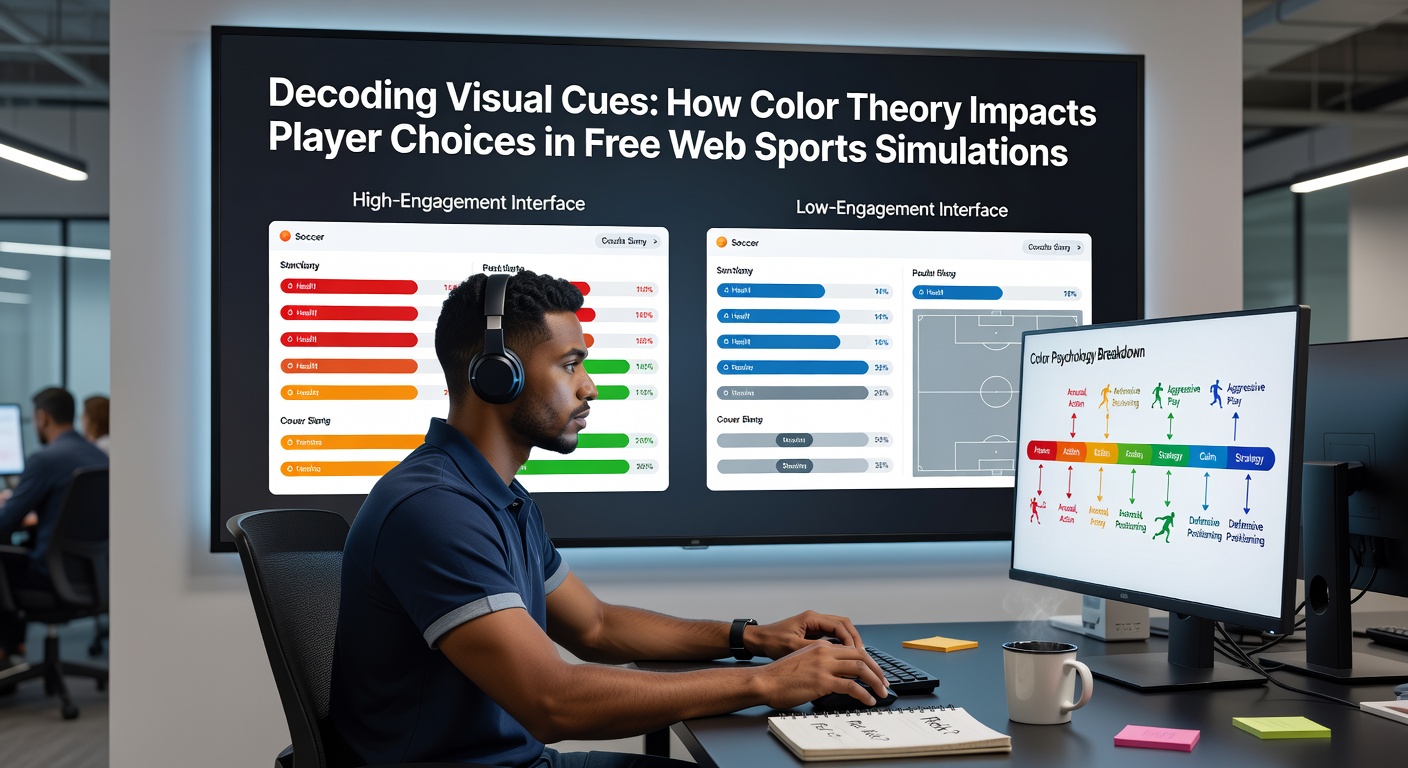
Background environments further modulate these effects. Stadium lighting rendered in cooler spectrums tends to slow decision velocity, prompting more conservative passing sequences, whereas vibrant arena backdrops accelerate tempo. Developers adjust these variables seasonally, and industry data compiled by the Entertainment Software Association shows measurable shifts in average match duration tied directly to palette updates released in early 2026.
Recent Developments and Player Behavior Patterns
By May 2026, several browser platforms introduced dynamic color systems that adapt based on real-time performance metrics. These adaptive layers alter UI saturation when players enter critical moments, and early telemetry indicates corresponding changes in choice distribution. Researchers tracking these implementations report that saturation increases in red channels during overtime periods lead to elevated attempt rates on high-difficulty maneuvers. External validation from European research consortia confirms similar patterns across regional user bases, suggesting the phenomenon transcends cultural boundaries within digital environments.
Accessibility and Inclusive Design Considerations
Color contrast standards established by web accessibility guidelines ensure that visual cues remain distinguishable for users with various vision profiles. Developers integrate these requirements while preserving the psychological impact of their chosen palettes. Case analyses from multiple titles demonstrate that compliant designs maintain the same directional influence on player choices, provided contrast ratios meet minimum thresholds. This balance allows broader participation without diluting the intended behavioral guidance.
Conclusion
Color theory continues to serve as a foundational tool in shaping interactions within free web sports simulations. Evidence from psychological studies, gameplay analytics, and design implementations shows consistent correlations between hue selection and subsequent player actions. As platforms evolve their visual systems, the relationship between color application and decision-making remains a measurable factor in how participants navigate virtual athletic environments.